Where the
Serra hums
Born in the Serra
WHERE THE IBERIAN
HONEYBEE BELONGS
HONEYBEE BELONGS
Born for this landscape
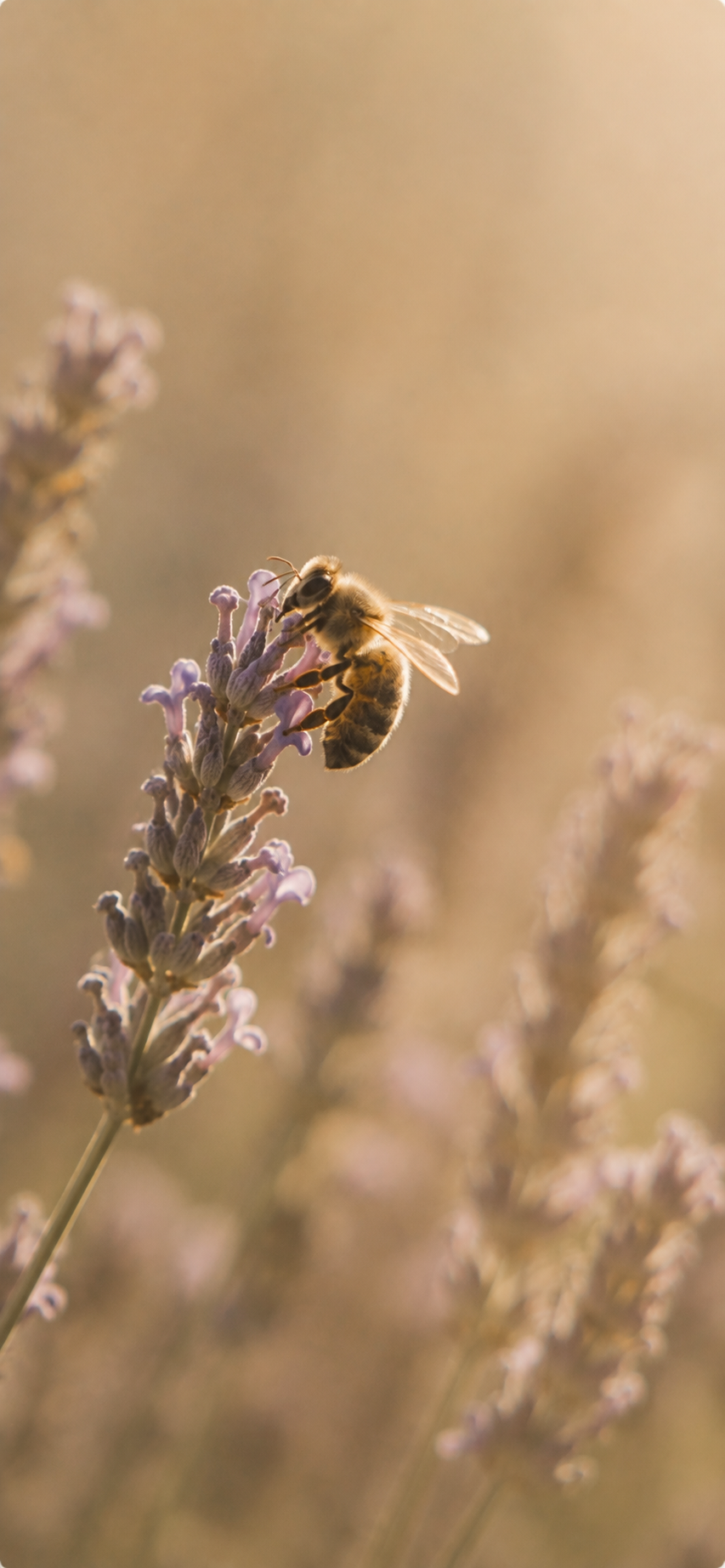
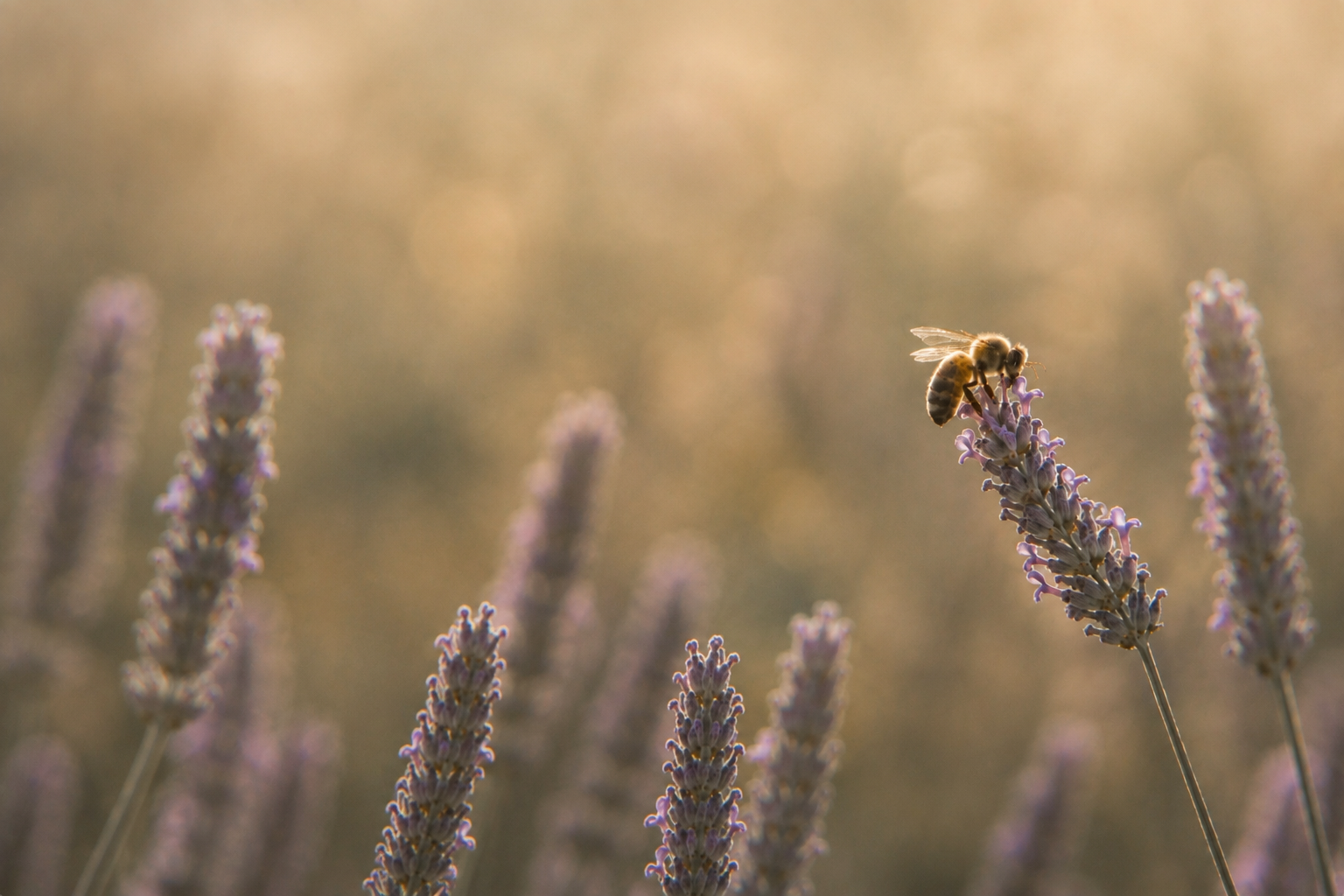
Of the more than 20,000 bee species worldwide, the Iberian honey bee lives here. Native to the Iberian Peninsula, it is naturally adapted to the heat, drought and wild flora of the Serra do Caldeirão.
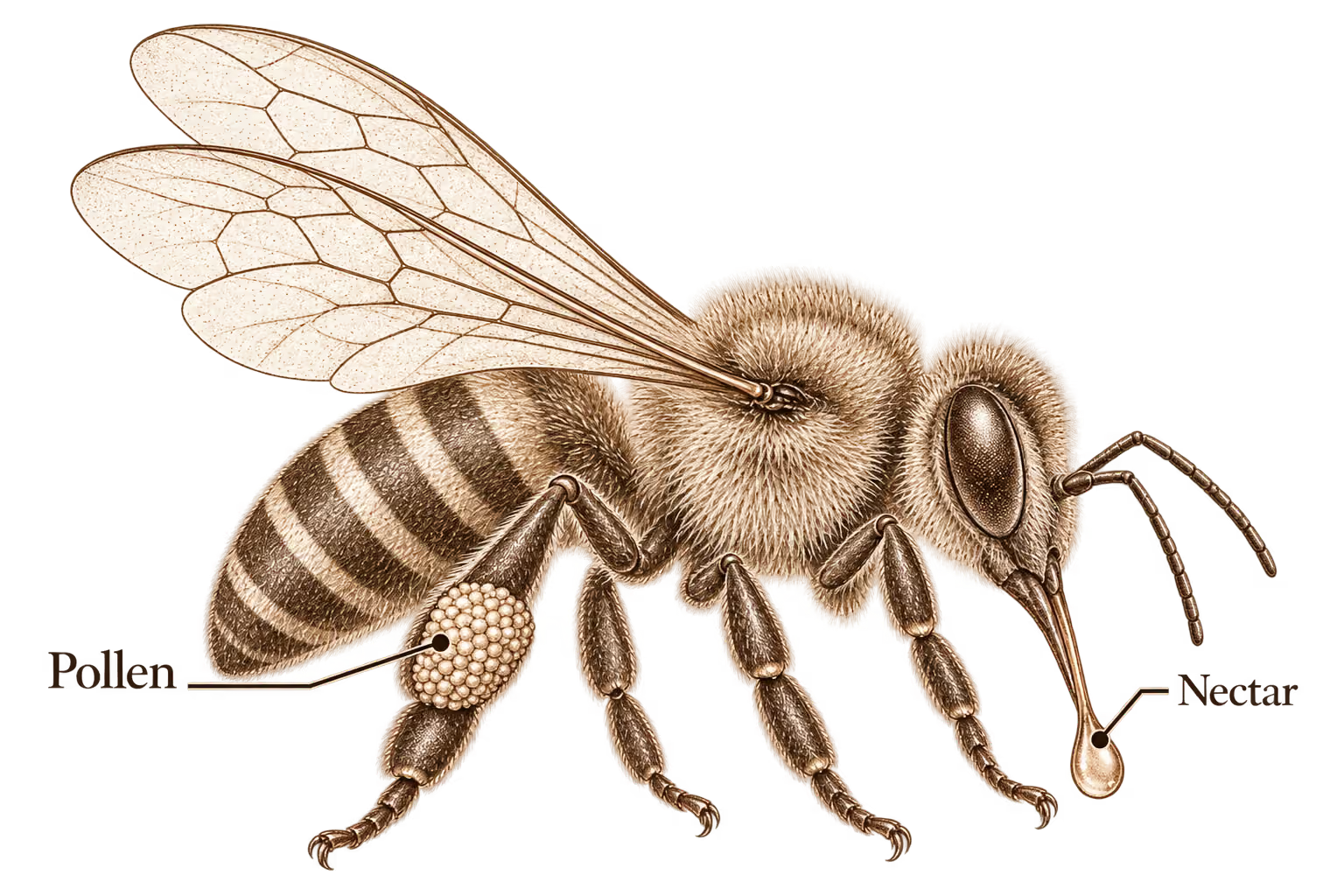
Shown above is the Iberian honey bee, Apis meliferera iberiensis. It tongue gathers nectar, while pollen is carried back to the hive in baskets on its hind legs. Inside the hive, nectar is gradually transformed into honey.
Both honey and pollen can be found in our collection: Wild Lavender Honey and Pollen.